Poems & Lyrics (in the English dialect) (1856)

Songs of the seasons, the forest and the sea, home and exile, mortality and immortality:

an adaptation of the book, Poems and Lyrics (in the English and Scotch dialects) by John Collie, of Boyndie (1834-1893), with music by his descendants in New Zealand, between 2020-2025

Listen

“Songs from the harp and lyre – a fantastic flow back from the ancient days” – Dr Emit Snake-Beings

The album includes collaborations with my nephew Hans Landon-Lane, plus guest appearances by Antony Milton and Dr Emit Snake-Beings.

“I have been lucky enough to hear some of Dave Edwards work on this at a couple of shows – very cool concept project and worth a listen” – James Trotman

Background

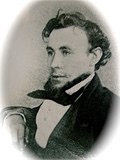
My great-great-grandfather published his book in 1856, before emigrating to New Zealand for the rest of his life.

Discovering this family outsider art precedent in 2018 cast fiffdimension in a whole new light! It sparked a seven-year project to record musical arrangements of his poems for a new century’s audience.

“And with a trembling hand I launch my tiny vessel into the troubled ocean of literature , where many a noble craft has been shattered to pieces…”

Like his better-known countryman (and influence) Robert Burns, John Collie wrote in both English and Scots. The other half of the album is Poems & Lyrics in the Scotch Dialect

Continue reading “Poems & Lyrics (in the English dialect) (1856)”

Poems & Lyrics (in the Scotch dialect) (1856)

Songs of alcohol, death, the devil, rebellion, kinship, and love gone awry, from 19th century Scotland:

an adaptation of the book, Poems and Lyrics (in the English and Scotch dialects) by John Collie, of Boyndie (1834-1893),

with music by his descendants, between 2018-2025 in New Zealand and France.

Listen

“Songs from the harp and lyre – a fantastic flow back from the ancient days” – Dr Emit Snake-Beings

“I have been lucky enough to hear some of Dave Edwards work on this at a couple of shows – very cool concept project and worth a listen” – James Trotman

Background

“And with a trembling hand I launch my tiny vessel into the troubled ocean of literature , where many a noble craft has been shattered to pieces…”

Continue reading “Poems & Lyrics (in the Scotch dialect) (1856)”

ilhas Atlânticas

This track was originally recorded by The Electricka Zoo (2017), and appears on the Other Islands: 2012-2018 compilation. It’s based around a (non-diatonic) Cmaj7 – Amaj7 pattern, with a bossa nova rhythm.

It’s dedicated to my great-great-grandfather Manuel Bernard.

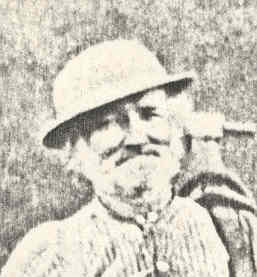
Manuel José Bernard (1847-1928)

He was born in 1847 in Ponta Delgada, Flores Island, Azores, Portugal.

The words are in (beginner) Portuguese:

Eu gosto de falar

no meus ancestrais

de as ilhas Atlânticas

Madeiras e Açores

Portugal is the westernmost country in Europe, with its back to it geographically and culturally. It was the edge of the known world for Europeans until the Age of Discovery. The Azores islands are even further west.

As a teenager, Manuel Bernard stowed away on a passing American whaling ship.

From a remote island in the Atlantic ocean, he ended up on an equally remote island in the Pacific – on the opposite side of the world, in Wellington, New Zealand.

Continue reading “ilhas Atlânticas”

Scotland, postponed

Around September 2020 I’d planned to travel to Scotland, on my first visit. There was to be a family gathering for my sister’s wedding in Edinburgh.

The trip’s now postponed indefinitely, for obvious reasons

I’d planned to visit Boyndie, Banffshire, where my great-great-grandfather John Collie grew up.

In 1856, in his early 20s he published a book : Poems and Lyrics (in the English and Scotch Dialects).

I‘ve started setting some of it to music.

Continue reading “Scotland, postponed”

Solitude

The first piece from the book Poems & Lyrics by John Collie (1856).

Recorded by John Collie’s great-great-grandson, during pandemic lockdown, March 2020.

‘SOLITUDE’

by John Collie, 1856

OH give me near some swelling stream to stray, 0r tread the windings of some pathless wood, For I am wearied of the bustling day, And long to meet thee, gloomy Solitude: That I with thee may climb those shelfy steeps, Which frown majestic o’er the boiling deeps. Continue reading “Solitude”

Fiji 1976, by Alastair Edwards

Film footage by my father, Alastair Edwards (1936-2010), in Nadi and around Viti Levu in 1976.

It’s from my parents’ honeymoon, a couple of years before I was born.

There was no sound, so I’ve added a soundtrack from Ruasagavulu, which Dr Emit Snake-Beings and I recorded in Suva decades later.

My Dad’s interest in film (then video) and photography was one of the key influences on my own travel and videomaking. He was doing this long before youtube or instagram!

I miss you Dad…

The Land of My Youth (by John Collie, 1856)

Poem by John Collie (1834-1893),


from his book Poems and Lyrics in the English and Scotch Dialects, published in Banffshire, Scotland in 1856

Performed by his great-great-grandson Dave Edwards on banjo at Wairarapa TV in Masterton, New Zealand, 4 May 2019.

John Collie emigrated to New Zealand in 1858. This poem seems to anticipate his leaving Scotland forever, to start a new life in a new country on the opposite side of the world.

Continue reading “The Land of My Youth (by John Collie, 1856)”

The Land of My Youth (by John Collie, 1856), January 2019 demo

January 2019, looking for a new sound and a new project – after completing Other Islands: 2012-2018.

It’s a poem by John Collie (1834-1893), my great-great-grandfather

from his book Poems and Lyrics in the English and Scotch Dialects, published in Scotland in 1856

John Collie emigrated to New Zealand in 1858. This poem seems to anticipate his leaving Scotland forever, to start a new life in a new country on the opposite side of the world.

In May I performed it live on Wairarapa TV.


Lyrics

Continue reading “The Land of My Youth (by John Collie, 1856), January 2019 demo”

The Blast of a Wintry Day (by John Collie, 1856)

A song written by my great-great-grandfather John Collie, in Banffshire, Scotland, in 1856.

It also appeared on

Other Islands: 2012​-​2018

Where it marked a return to my solo acoustic approach of early years.

lyrics

Continue reading “The Blast of a Wintry Day (by John Collie, 1856)”

South Island Sessions (2006)

Recorded in Nelson, NZ, 2006.

Listen

About

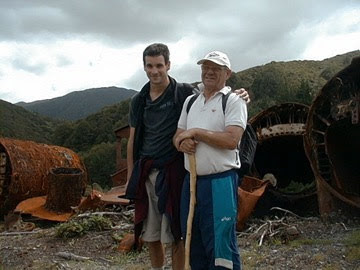
1861 revisited – my pākeha (European) ancestors, John ‘Totara Jack’ and Mary Edwards, arrived in the South Island of New Zealand on board the Olympus and settled in Nelson1.

John ‘Totara Jack’ Edwards

When I lived nearby a century and a half later,

  • I found the address where they’d lived, just below a spot on a hill that marks the geographical centre of NZ.
  • I recorded and toured with South Island musicians;
  • studied at the Nelson School of Music – and finally had the chance to learn some ‘conventional’ technique;
  • played in Hokitika, Greymouth, Westport, Nelson, Blenheim, Lyttelton and Dunedin
    • (as well as Brisbane, Australia2);
  • and recorded the sound of tui and makomako (native birds) in Nelson Lakes National Park.

The early settler stories marked the start of an interest in genealogy, and prompted the music video for The Ballad of William Knife3 (loosely based on ‘Totara Jack’).

In contrast to the ‘traditional’ South Island NZ ‘Flying Nun‘ or The Dead C inspired sounds, South Island Sessions blended acoustic instruments with field recordings and electronic glitches. I played acoustic guitar, banjo and saxophone, and delegated the electric guitar role to two local players. We named this new genre “Steampunk Folktronica4.

Credits

  • Dave Black – acoustic guitar (2,6), banjo (3,4,6), drums (4), harmonica (2), laptop, field recordings, tenor saxophone (6,7), and vocals
  • Cylvi M – vocals & phat beatz (1)
  • Hayden Gifkins – electric guitar (5,7)
  • Matthew Thornicroft – electric guitar (5,7)
  • Damian ‘Frey’ Stewart – no-input mixing desk (3)
  • Cookie – drums (5, 6)

Recorded in Nelson NZ, 2006

Tracklist

Continue reading “South Island Sessions (2006)”